
Blog
How to Use an Essential Oil Diffuser UK: A Beginner’s Guide

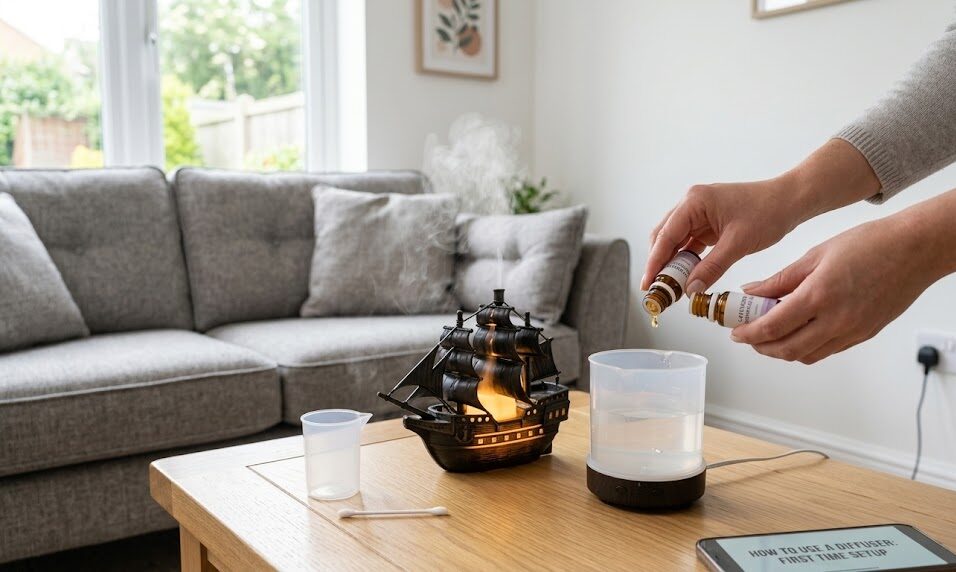
To use an essential oil diffuser uk: fill the water tank to the marked line with tap or distilled water, add 3–5 drops of essential oil per 100ml of water, replace the cover, plug in the device, and press the power button. Most diffusers begin producing a fine, cool mist within seconds via ultrasonic vibrations — instantly transforming the scent and ambience of any room.
Introduction: Why Your Home Deserves Better Air
There is a reason aromatherapy has been practised for centuries. Scent is one of the most powerful triggers of mood, memory, and relaxation — and a quality aroma diffuser brings that power directly into your living space.
Whether you’ve just unboxed your very first device or you’ve been gifted one and aren’t quite sure where to start, this guide walks you through everything step by step. From filling the water tank correctly to choosing the right essential oil concentration, you’ll have your diffuser running beautifully within minutes.
The transformation a diffuser brings to a home is subtle but unmistakable. A well-chosen blend of oils can make your sitting room feel like a spa, your bedroom feel like a sanctuary, and your home office feel considerably less like a home office.
Let’s get started.
What You’ll Need Before You Begin
Before switching anything on, gather the following:
- Your aroma diffuser (unboxed and on a flat, stable surface)
- Clean tap water or distilled water (more on this below)
- Essential oils of your choice — lavender, eucalyptus, and sweet orange are excellent starting points
- A small measuring jug (optional, but helpful for beginners)
- A dry cloth for any minor spills
Step-by-Step: How to Use Your Essential Oil Diffuser
Step 1 — Prepare Your Diffuser and Choose Your Location
Placement matters more than most beginners realise.
Set your diffuser on a firm, waterproof surface — a side table, shelf, or countertop works well. Avoid placing it directly on wooden furniture without a protective mat, as occasional condensation from the mist output can mark delicate surfaces over time.
The best location for a diffuser is a central area of the room, slightly elevated (such as on a table rather than the floor), away from direct sunlight, open windows, and air vents. This allows the vapour to disperse evenly rather than being blown away or settling in one corner.
Also consider the room size. Most domestic diffusers are designed for spaces between 20–40 square metres. A diffuser rated for a small bedroom will underperform in an open-plan kitchen-diner — check your device’s stated coverage before you begin.
Step 2 — Fill the Water Tank Correctly
Remove the top cover of your diffuser and locate the water tank. You’ll notice a maximum fill line marked on the inside — do not exceed this.
Tap water vs distilled water: This is one of the most common questions from beginners. In most parts of the UK, standard tap water is perfectly adequate. However, if you live in a hard water area (common across much of South East England), mineral deposits can gradually build up inside the tank and on the ultrasonic disc. Using distilled or filtered water in these cases will prolong your diffuser’s life and keep misting performance at its best.
Pour water in slowly using a jug or directly from a bottle. Avoid splashing water into the air vent holes or onto the ultrasonic vibration plate at the base of the tank — this is a delicate component that powers the misting function.
Step 3 — Add Your Essential Oils
This is where the magic happens.
Essential oil concentration is key. As a general rule:
- 3–5 drops per 100ml of water for a subtle, background scent
- 6–10 drops per 100ml for a stronger, more immersive aroma
- Never exceed 10–12 drops per 100ml — more oil does not mean more benefit, and overloading the water can leave an oily residue in the tank
Add your drops directly into the water (not into the air vent). You can use a single oil for simplicity, or blend two to three oils for more complexity. Popular beginner combinations include:
- Lavender + bergamot — calming and mood-lifting
- Eucalyptus + peppermint — refreshing and ideal for clearing the head
- Sweet orange + cedarwood — warm, grounding, and homely
Replace the cover securely before moving on.
Step 4 — Power On and Select Your Settings
Plug your diffuser into a standard UK wall socket and press the power button. Most modern ultrasonic diffusers will begin producing a fine, cool mist almost immediately.
Understanding your mist settings:
- Continuous mist — runs until the water runs out or you switch it off manually
- Intermittent mist — alternates between misting and pausing (typically 30 seconds on, 30 seconds off), which conserves water and extends the diffusing session
- Timer settings — many devices allow you to set automatic shut-off at 1, 3, or 6-hour intervals
If your diffuser features ambient lighting (LED mood lights), this is typically toggled separately from the mist function. The soft glow of a diffuser at night adds a genuinely lovely atmosphere to a bedroom or bathroom — especially in models crafted to resemble decorative objects, such as ship-lantern or ceramic designs.
Most diffusers will automatically switch off when the water tank is empty, which is an important safety feature — always confirm your device has this before leaving it unattended.
Dos and Don’ts for Safe, Long-Lasting Use
✅ Do:
- Do use BPA-free plastic or ceramic diffusers — these are safer for continuous home use and won’t leach chemicals when exposed to water and essential oils over time
- Do clean your diffuser regularly — at least once a week for daily users (see our full cleaning guide for step-by-step instructions)
- Do start with milder oils if you have pets or young children in the home — some oils, including tea tree and eucalyptus, should be used with caution around cats, dogs, and infants
- Do experiment with different blends — personal scent preference is highly individual, and finding your signature home scent is part of the enjoyment
- Do store essential oils in a cool, dark place to preserve their potency
❌ Don’t:
- Don’t use synthetic fragrance oils in an ultrasonic diffuser — these are thicker than pure essential oils and can clog the ultrasonic disc
- Don’t overfill the water tank — water above the maximum fill line can damage internal components and reduce misting performance
- Don’t place the diffuser on the floor — the vapour disperses upwards and outwards; a low position wastes most of the effect
- Don’t run the diffuser in a completely sealed room for extended periods — occasional ventilation is recommended, particularly with stronger oils
- Don’t use citrus or resinous oils (like frankincense) without wiping the tank between sessions, as these can leave residue more quickly than lighter floral oils
A Note on Cleaning and Maintenance
A well-maintained diffuser will serve you far longer and perform far better than a neglected one. Mineral scale from hard water, combined with essential oil residue, can reduce misting output and affect the scent purity of your blends over time.
We’ve put together a dedicated cleaning guide that covers the full process — from routine weekly wipes to deep cleaning the ultrasonic plate — so your device stays in peak condition. Look out for our “How to Clean Your Aroma Diffuser” guide on the site.
For now, as a basic rule: empty any remaining water after each session, give the tank a gentle wipe with a damp cloth, and never submerge the device in water.
Frequently Asked Questions
How many drops of essential oil per 100ml?
The recommended amount is 3–5 drops per 100ml for a gentle, ambient scent. For a more pronounced aroma — particularly in larger rooms — you can increase to 6–10 drops per 100ml. Avoid exceeding this, as over-concentration doesn’t enhance the aromatherapy benefits and can leave oily residue inside the tank.
Can I leave my diffuser on overnight?
Yes, but with conditions. If your diffuser has an automatic shut-off feature (triggered when the water runs low), it is generally safe to run overnight. Choose a device with an intermittent mist setting to reduce output and extend the session. Keep the bedroom door slightly ajar for airflow, and opt for calming oils such as lavender or chamomile rather than stimulating ones like peppermint. Avoid using very potent oils in high concentrations during overnight use, especially if you share the room with children or pets. Please read ourPet safety Guide.
Where is the best place to put a diffuser?
The ideal position is a central, elevated surface — a bedside table, coffee table, or bathroom shelf. Aim for a spot that is:
- At least 60cm off the ground
- Away from direct sunlight and heat sources
- Not directly beneath air conditioning units or in draughty spots
- On a waterproof mat to protect the surface beneath
For open-plan spaces, placing the diffuser near the area where you spend most time (rather than in the middle of the room) often gives the best results, as the scent concentrates around you rather than dispersing thinly across the entire space.
Ready to Elevate Your Experience?
Now that you know exactly how to use an essential oil diffuser, you might find yourself wanting to explore beyond the basics.
If you’re looking for a diffuser that works beautifully and looks the part, ourShip model diffusers are a genuine talking point — handcrafted in design, they function as decorative centrepieces as much as wellness devices. For those seeking something more contemporary, our range of electric ultrasonic diffusers in ceramic and BPA-free finishes offer whisper-quiet operation and elegant ambient lighting that complements any interior.
Browse our full collection and find the diffuser that fits your home, your style, and your wellness routine.
Last updated: May 2026 | Written by our in-house aromatherapy specialists