
Blog
How to Clean Your Aroma Diffuser The Ultimate Guide

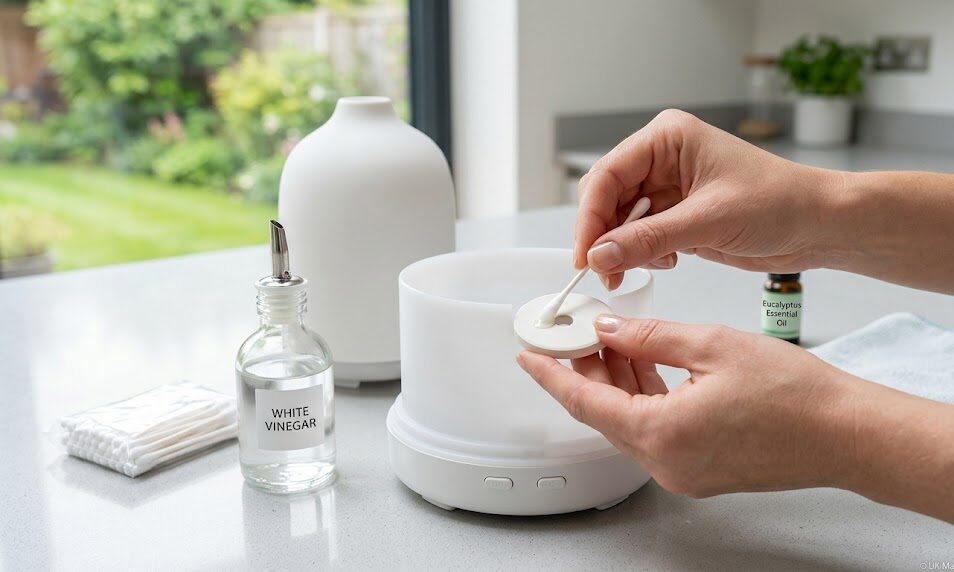
Keep your diffuser performing at its best with our expert-recommended cleaning protocol
| Quick Answer: How to Clean Your Aroma Diffuser: Empty the water tank and wipe the interior with a damp cloth. Add 10–15 drops of white vinegar to half a tank of clean water, run the diffuser for 5 minutes, then drain and wipe dry. Use a cotton bud to gently clean the ultrasonic nebuliser plate. This simple routine removes mineral buildup and keeps your diffuser misting perfectly. |
Why Cleaning Your Diffuser is Non-Negotiable
Your aroma diffuser is a precision instrument. At its heart lies a small but critical component called the ultrasonic nebuliser plate — a ceramic or metal disc that vibrates at extremely high frequencies (typically 1–2.4 MHz) to atomise water and essential oil into a fine, therapeutic mist. This plate is extraordinarily effective, but it is also highly sensitive to contamination.
Every time you fill your diffuser, you introduce minerals from your tap water. In the UK, this is far from a trivial concern.
| 💧 A Special Note for UK Users: Hard Water & LimescaleThe UK has some of the hardest water in Europe, particularly across London and South East England, where water hardness regularly exceeds 300 mg/L (milligrams per litre of calcium carbonate). According to Thames Water, much of Greater London’s supply is classified as ‘very hard.’ This means every refill deposits calcium and magnesium salts onto your ultrasonic nebuliser plate. Over time, these limescale deposits form a chalky white crust that directly impairs vibration efficiency — the primary driver of mist output and scent diffusion. |
The consequences of unchecked mineral buildup are significant:
- Reduced mist output — the plate cannot vibrate effectively under a layer of scale.
- Compromised scent purity — residual oil deposits from previous blends contaminate new ones, muddying your Aromatherapy experience.
- Sensor malfunction — the water sensor, which monitors water levels and auto-shuts the unit for safety, can be triggered erroneously by scale or residue, causing premature shut-off.
- Premature device failure — persistent buildup forces the motor to work harder, shortening the lifespan of the unit.
The Quick Clean: Your After-Every-Use Routine (2 Minutes)
Establishing a brief post-use habit is the single most effective way to prevent significant buildup. This routine takes under two minutes and should be carried out each time your diffuser has been running.
What You’ll Need:
- A soft, lint-free cloth or microfibre towel
- A dry cotton bud (cotton swab)
- Clean, cold tap water
Steps:
- Switch off your diffuser and unplug it from the mains. Never clean an electrical device while powered.
- Pour any remaining water out of the tank. Tilt the unit carefully to ensure the reservoir is fully empty.
- Dampen your lint-free cloth with clean water and wipe the inside of the water reservoir thoroughly, removing any oily film or residue.
- Take a dry cotton bud and very gently clean around the ultrasonic nebuliser plate in circular motions. Do not press down firmly — this component is delicate. The goal is to lift any surface residue before it hardens.
- Check the water sensor (typically a small float or probe near the base of the tank). Wipe it gently with the damp cloth to keep it free of deposits.
- Leave the lid off and allow the reservoir to air-dry completely before storing.
| Pro TipUsing filtered or bottled water in your diffuser instead of hard tap water is one of the most effective ways to reduce limescale deposits between cleans, particularly for users in London and the South East. |
The Deep Clean: Monthly Descaling with White Vinegar or Citric Acid
Once a month — or more frequently if you live in a hard water area or use your diffuser daily — perform a full descaling treatment. This process dissolves limescale deposits and stubborn oil residue that the quick clean cannot address.
Method 1: White Vinegar Soak (Recommended)
White vinegar (diluted acetic acid) is mildly acidic and highly effective at dissolving calcium carbonate limescale. It is safe for the internal components of most ultrasonic diffusers and leaves no harmful residue when rinsed properly.
What You’ll Need:
- White distilled vinegar (available at any UK supermarket, typically 5% acetic acid strength)
- Clean water
- A cotton bud
- A soft cloth
Steps:
- Unplug your diffuser and empty the water tank completely.
- Fill the reservoir to the halfway mark with clean water.
- Add 10–15 drops of white vinegar to the water. Do not exceed this ratio; the solution needs to be dilute to be safe for prolonged contact with internal components.
- Replace the lid and run the diffuser for 5–7 minutes. This allows the vinegar solution to circulate and begin dissolving mineral deposits.
- Switch off and unplug the unit. Empty the vinegar solution completely from the tank.
- Dip a cotton bud in undiluted white vinegar and carefully clean around the ultrasonic nebuliser plate, working in gentle circles to lift any remaining limescale deposits.
- Refill the tank with clean, fresh water and run the diffuser for a further 3–5 minutes. This rinse cycle flushes out any residual vinegar.
- Empty completely, wipe dry with a soft cloth, and air-dry before use or storage.
Method 2: Citric Acid Solution (For Heavy Limescale)
For diffusers with significant, hardened limescale deposits — common in London and South East England where water is exceptionally hard — a citric acid solution may be more effective. Citric acid is a stronger descaling agent and is widely used in commercial appliance descalers.
Dissolve ½ teaspoon of food-grade citric acid powder in 200ml of lukewarm water. Add this to the reservoir and follow the same process as the vinegar method above. Allow the solution to sit in the powered-off diffuser for 15–20 minutes before running, to give the acid extra contact time with stubborn deposits.
| ⚠️ ImportantNever use citric acid on diffusers with visible copper or brass internal fittings, as prolonged acid exposure can cause corrosion. Refer to your product manual or check with our team if you are unsure. |
The “Never” List: What to Avoid at All Costs
Incorrect cleaning methods are a leading cause of avoidable diffuser damage. Please observe the following rules without exception:
- Never submerge the base unit in water. Your diffuser is not waterproof. The base contains the motor, electronics, and power circuitry. Even a brief submersion can cause irreparable damage and creates a serious electrical safety hazard.
- Never use bleach, detergent, or commercial household cleaners inside the water tank. These chemicals leave residues that contaminate your essential oils, damage internal components, and can release toxic fumes when the diffuser runs.
- Never use metal scrapers, knives, or abrasive scrubbing pads on the ultrasonic nebuliser plate. The plate’s surface is precision-engineered and extremely fragile. Scratching or chipping it will permanently impair misting performance and may render the diffuser inoperable.
- Never use boiling or very hot water in the reservoir. Extreme heat can warp plastic components and damage the water sensor or internal seals.
- Never leave standing water in the tank between uses, particularly overnight. Stagnant water encourages microbial growth and accelerates mineral deposit formation.
- Never use undiluted essential oils directly on the ultrasonic nebuliser plate without water. Always dilute oils in water as directed in our Beginner’s Guide to Using Your Diffuser.
Troubleshooting: Why is My Diffuser Producing Less Mist?
Reduced mist output is the most common diffuser complaint — and in the vast majority of cases, the root cause is a cleaning issue rather than a mechanical fault. Before contacting customer support or assuming your diffuser needs replacing, work through the following checklist:
- Limescale on the ultrasonic nebuliser plate — this is the number one culprit, especially for users in hard water areas. A scaled plate cannot vibrate at full efficiency. Perform an immediate deep clean using the white vinegar or citric acid method above.
- Residual oil buildup on the plate — thick, waxy residue from undiluted or high-resin essential oils (such as benzoin or myrrh) can coat the plate and dampen vibration. A cotton bud soaked in white vinegar will usually resolve this.
- A dirty or obstructed water sensor — if the sensor is coated in scale or oil, it may misread water levels and restrict output or trigger premature auto-shutoff. Clean the sensor with a damp cloth.
- Insufficient water level — always fill to the minimum marked line. Running the diffuser below the minimum can stress the motor and reduce mist production.
- Ventilation blockage — ensure the mist outlet is not obstructed and the diffuser is positioned on a flat surface with adequate clearance.
| 🔧 Still Not Resolved?If mist output remains poor after a thorough deep clean, the ultrasonic nebuliser plate may have sustained physical damage or has reached the end of its service life. Contact our support team for a diagnosis. |
Frequently Asked Questions
Can I use lemon juice instead of white vinegar?
Technically yes, lemon juice contains citric acid and is mildly effective at dissolving limescale. However, it also contains sugars and other organic compounds that can leave a sticky residue inside the reservoir and encourage microbial growth. We strongly recommend using white distilled vinegar or pure food-grade citric acid powder instead, as these are clean, consistent, and free from organic residues.
How often should I deep clean my diffuser?
We recommend a full descaling treatment once per month for average use (1–2 hours daily). If you live in a hard water area such as London or South East England, or if you use your diffuser for extended sessions of 3–4 hours daily, increase this to every two weeks. You can also use fortnightly deep cleans during winter months when diffusers tend to be used more intensively.
What happens if I don’t clean my diffuser?
Neglecting regular cleaning leads to a progressive accumulation of limescale deposits and essential oil residue on the ultrasonic nebuliser plate and water sensor. Initially this reduces mist output and scent clarity. Over time, the motor compensates by working harder, generating more heat and accelerating wear. In severe cases, the plate can become permanently impaired, the water sensor may fail entirely, and the diffuser will cease to function. Regular maintenance is, quite simply, the most cost-effective way to protect your investment.
Can I use tap water or should I always use filtered water?
You can use tap water, but if you are in a hard water region, filtered or bottled water will noticeably extend the time between required deep cleans. A simple filtered water jug (such as a BRITA-style pitcher) is sufficient — you do not need distilled or deionised water for most diffusers.
Further Reading & Related Guides
To get the very best from your diffuser, we recommend reading the following guides in our care series:
- Beginner’s Guide to Setting Up Your Aroma Diffuser — covers correct water filling, oil dilution ratios, ideal positioning, and first-use setup to help you avoid common early mistakes that can accelerate wear.
- Pet Safety Guide: Choosing the Right Essential Oils for Homes with Animals — many popular essential oils are toxic to cats, dogs, and small animals. If you share your home with pets, please read this guide before selecting your oil blends.
| ✨ Invest in Quality. Maintain with Care.Our premium ceramic diffusers and ship-model diffusers are engineered for longevity — but like any precision instrument, they perform best when properly maintained. The cleaning steps in this guide take less than ten minutes per month and can add years to the life of your device. A well-maintained diffuser delivers consistently pure mist, uncontaminated scent, and the full therapeutic benefit of your essential oils. Protect your investment. Clean regularly. Diffuse beautifully. |
© Aromatherapy Care Series. For product-specific queries, please contact our customer support team.