
Blog
What Is an Aromatherapy Diffuser?

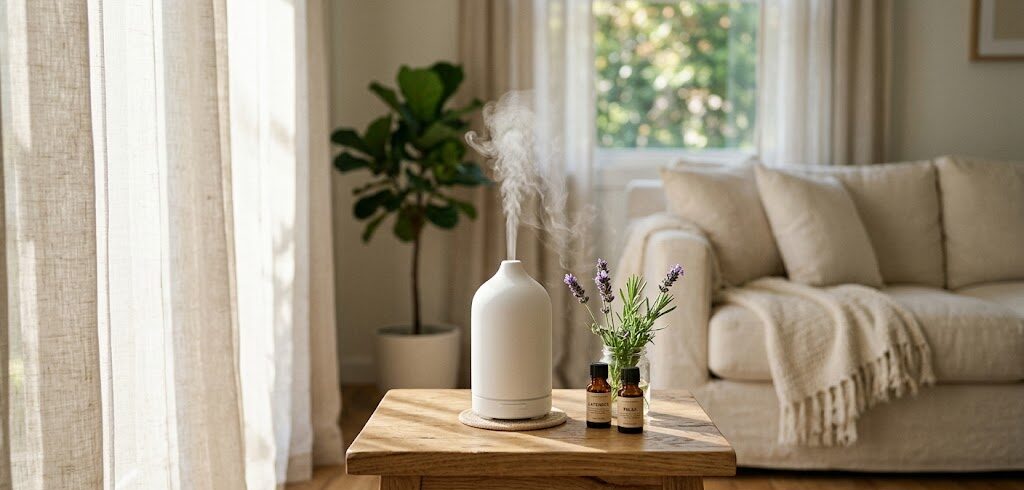
Benefits, Types & How to Use It
A complete beginner-friendly guide to essential oil diffusers for wellness, relaxation & home fragrance
📋 Quick Summary
| An aromatherapy diffuser disperses essential oils into the air, creating a therapeutic and fragrant atmosphere at home or in the office. In this guide, you will discover what a diffuser is, how it works, the main types available, science-backed benefits, a simple step-by-step usage guide, the best essential oils to try, and important safety tips. |
Introduction: Why More People Are Turning to Aromatherapy Diffusers
Think about the last time you walked into a room and a particular scent instantly changed your mood — maybe the warm smell of lavender made you feel calmer, or a citrusy aroma gave you a sudden boost of energy. That is not just your imagination. Science confirms that scent has a powerful and direct connection to the part of the brain that controls emotions and memory.
This is exactly why the aromatherapy diffuser has become one of the most popular wellness tools in modern homes. Whether you are dealing with everyday stress, struggling to get proper sleep, or simply want a natural alternative to synthetic air fresheners, a diffuser can make a real, noticeable difference.
In this guide, we will walk you through everything you need to know — from what an aromatherapy diffuser actually is, to the different types available, the key benefits, and a straightforward step-by-step guide on how to use one safely and effectively.
What Is an Aromatherapy Diffuser?
An aromatherapy diffuser is a device that breaks essential oils into microscopic particles and releases them into the surrounding air, filling your space with a therapeutic fragrance. Unlike an oil burner or scented candle that relies on flame or high heat, most modern diffusers use cool-mist technology, which means the chemical structure of the oil remains intact and its benefits are preserved.
Aromatherapy itself is a centuries-old holistic practice. The term was formally coined in the early 20th century, but humans have been using plant-derived scents for healing and relaxation for over 5,000 years — across ancient Egyptian, Chinese, and Indian traditions.
A common point of confusion worth clearing up: a diffuser is not the same as a humidifier. A humidifier’s primary job is to add moisture to the air. A diffuser, on the other hand, is specifically designed to disperse essential oil molecules for aromatherapy purposes — though some ultrasonic models do offer a mild humidifying effect as a bonus.
How Does an Aromatherapy Diffuser Work?
The core job of any aromatherapy diffuser is the same: to atomize — or break down — essential oils into incredibly fine particles and send them into the air so that you can inhale them.
When those micro-particles reach your nose, they interact with your olfactory system — the sensory network responsible for your sense of smell. Signals are sent almost instantly to the limbic system, the region of your brain that governs mood, stress response, memory, and even hormone regulation. This is why simply smelling lavender can ease tension in minutes, or why peppermint oil can sharpen your alertness without a cup of coffee.
The method of atomization varies depending on the type of diffuser you own, which brings us to the next important section.
Types of Aromatherapy Diffusers: Which One Is Right for You?
Not all diffusers work the same way, and picking the right type can make a big difference in your experience. Here is a detailed look at the five main types:
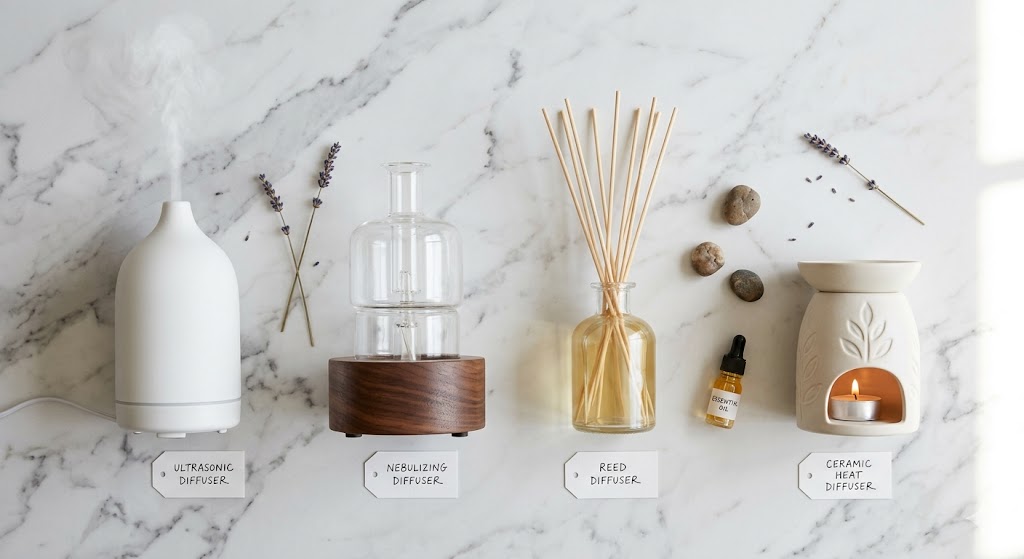
1. Ultrasonic Diffuser
This is the most popular type you will find in homes today. An ultrasonic diffuser uses a small vibrating disc that oscillates at ultrasonic speeds, creating tiny waves that break a water-and-oil mixture into a fine, cool mist. That mist is then released into the room.
- Best for: Bedrooms, living rooms, offices
- Pros: Quiet operation, energy-efficient, doubles as a mild humidifier, wide coverage, safe around children
- Cons: Dilutes the oil with water, so the scent may be subtler
2. Nebulizing Diffuser
A nebulizing diffuser is widely regarded as the most therapeutically powerful option. It uses pressurized air to draw pure essential oil from a glass reservoir and breaks it into an ultra-fine mist without any water or heat involved. Because the oil is never diluted or heated, every molecule you inhale carries the full therapeutic potency of the plant extract.
- Best for: Large spaces, intensive aromatherapy sessions, meditation rooms
- Pros: Maximum oil potency, no water needed, strong and consistent scent output
- Cons: Uses oil faster, tends to be louder, pricier than other types
3. Evaporative Diffuser
An evaporative diffuser works by pulling air through a pad or filter that has been soaked in essential oil. The airflow causes the oil to evaporate and disperse naturally into the room.
- Best for: Personal use, travel, small rooms
- Pros: Portable, no water or electricity required in basic models
- Cons: Lighter compounds evaporate first, so the therapeutic profile can shift over time
4. Heat Diffuser
Heat diffusers use gentle warmth — either from electricity or a candle flame — to warm the essential oil and release its scent into the air. They are simple and quiet.
- Best for: Subtle background fragrance, budget-conscious users
- Pros: Affordable, silent, no moving parts
- Cons: Heat can slightly alter the chemical composition of delicate oils, reducing their therapeutic effectiveness
5. Reed Diffuser (Passive Diffuser)
Reed diffusers are entirely passive — no electricity, no heat, no water. Wooden or rattan reeds are placed in a bottle of diluted essential oil, and they slowly wick the oil upward, allowing it to evaporate gradually at room temperature.
- Best for: Continuous subtle fragrance in small spaces like bathrooms, hallways, or entryways
- Pros: No power needed, zero maintenance, works 24/7
- Cons: Very subtle scent, not suitable for active therapeutic sessions
Quick Comparison Table
| Type | Best For | Uses Water | Uses Heat | Scent Strength |
| Ultrasonic | Home everyday use | Yes | No | Moderate |
| Nebulizing | Intensive therapy / large spaces | No | No | Strong |
| Evaporative | Personal / travel use | No | No | Mild |
| Heat | Budget option / quiet spaces | No | Yes | Mild-Moderate |
| Reed | Continuous subtle scent | No | No | Very Subtle |
Benefits of Using an Aromatherapy Diffuser
This is where things get really interesting. The benefits of using an aromatherapy diffuser go well beyond just making your room smell pleasant. Here are the most well-documented advantages:
1. Stress Relief and Deep Relaxation
Oils such as lavender, chamomile, and bergamot have been studied for their calming effects on the nervous system. Diffusing them into the air creates a soothing atmosphere that can help bring down cortisol levels — the body’s primary stress hormone — after a long or overwhelming day.
2. Better Sleep Quality
Struggling to wind down at night? Diffusing lavender or sandalwood in your bedroom about 30 minutes before you plan to sleep can prime your body for rest. Research has shown that lavender, in particular, can help people fall asleep faster and enjoy deeper, more restorative sleep cycles.
3. Sharper Focus and Mental Clarity
Peppermint and lemon essential oils are well-known for their ability to enhance alertness and cognitive performance. If you work from home or study for long hours, running your diffuser with these oils during the day can help you stay sharp and minimize distractions.
4. Mood Enhancement and Emotional Balance
Citrus oils — think orange, grapefruit, and bergamot — are naturally uplifting. They have been linked to reductions in feelings of low mood and fatigue. Even on difficult days, a few drops of a bright citrus blend in your aromatherapy diffuser can shift the energy in the room.
5. Air Purification
Oils like eucalyptus and tea tree contain natural antibacterial and antiviral compounds. When dispersed through a diffuser, these particles can help reduce airborne pathogens in your indoor environment — a particularly helpful benefit during cold and flu season.
6. Natural Humidification (Ultrasonic Models)
Ultrasonic diffusers release a cool mist that adds moisture to dry indoor air. This is especially helpful in winter months when central heating strips the air of humidity, causing dry skin, nasal irritation, and increased susceptibility to respiratory issues.
7. A Safer Alternative to Synthetic Fragrances
Commercial air fresheners and synthetic candles often contain artificial chemicals and volatile organic compounds (VOCs) that can irritate the respiratory tract. An aromatherapy diffuser using pure essential oils offers a natural, plant-based way to fragrance your home without any of those unnecessary additives.
How to Use an Aromatherapy Diffuser: Step-by-Step Guide
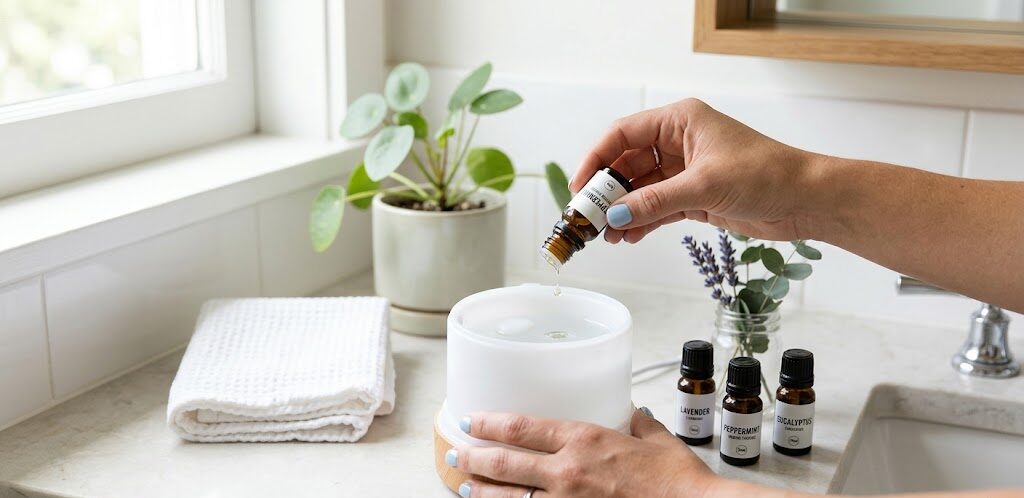
Using an aromatherapy diffuser is simple, but following a few basic steps will help you get the most out of it — and keep you safe:
- Choose the right location. Place your diffuser on a flat, stable surface — a nightstand, desk, or side table works well. Keep it away from direct sunlight, heat sources, and electronics.
- Fill with clean, cool water. For ultrasonic diffusers, fill the reservoir up to the marked line. Always use clean, preferably filtered water. Cold water is actually better — it produces a lighter, finer mist and protects the internal components.
- Add your essential oils. Typically, 5 to 10 drops is enough for a standard-sized room. For smaller spaces, start with 3 to 5 drops. You can always add more once you gauge the scent strength.
- Choose your settings. Many modern diffusers offer a timer function, intermittent mist mode, and optional LED lighting. The intermittent mode — where the diffuser cycles on and off — is actually more effective for sustained diffusion.
- Run it in sessions. A good rule of thumb is 30 minutes on, then 60 minutes off. This prevents olfactory fatigue — where your nose gets so used to the scent that you can no longer detect it — and avoids overuse of oil in a short period.
- Clean your diffuser regularly. After each use, wipe the water reservoir dry with a soft cloth. Once a week, do a deeper clean by running the diffuser with a mix of water and a small amount of white vinegar, then rinsing thoroughly. This prevents oil residue buildup and keeps the mist output at full efficiency.
💡 Pro Tip
| Always consult the manufacturer’s instructions before your first use. Different diffuser models have slightly different water levels, recommended oil quantities, and cleaning procedures. |
Best Essential Oils to Use in Your Aromatherapy Diffuser
Choosing the right essential oil makes all the difference. Here is a practical reference guide to the most popular and widely used options:
| Essential Oil | Primary Benefit | Best Time to Use |
| Lavender | Relaxation, stress relief, better sleep | Evening / bedtime |
| Peppermint | Focus, energy, headache relief | Morning / daytime work |
| Eucalyptus | Respiratory support, air purification | Anytime, especially in winter |
| Lemon | Mental clarity, mood uplift, freshness | Morning / home office |
| Tea Tree | Antimicrobial, air cleansing | Cold & flu season |
| Frankincense | Grounding, meditation, deep calm | Meditation / yoga |
| Bergamot | Anxiety relief, emotional balance | Afternoon slump |
| Sweet Orange | Uplifting, warm, family-friendly | Living room / daytime |
Beginner-Friendly Essential Oil Blends to Try
- Calm & Sleep Blend: 4 drops lavender + 3 drops sweet orange + 2 drops Roman chamomile
- Focus & Productivity Blend: 4 drops peppermint + 3 drops lemon + 2 drops rosemary
- Winter Wellness Blend: 4 drops eucalyptus + 3 drops tea tree + 2 drops frankincense
- Mood Lift Blend: 4 drops bergamot + 3 drops grapefruit + 2 drops lemon
Safety Tips and Precautions
Aromatherapy diffusers are generally very safe when used properly. That said, there are a few important precautions worth keeping in mind:
- Use only pure, high-quality essential oils. Synthetic or adulterated oils can release harmful chemical compounds when diffused. Always buy from reputable brands that offer certified, 100% pure oils.
- Do not run your diffuser continuously. Diffuse in 30-to-60-minute intervals. Prolonged exposure in an enclosed space can cause headaches or nausea, even with natural oils.
- Be cautious around pets. Dogs and cats have a far more sensitive olfactory system than humans. Some essential oils — including tea tree and certain citrus oils — can be toxic to them when concentrated. Always ensure the room is well-ventilated and your pet can leave if they choose.
- Consult a healthcare provider during pregnancy. Several essential oils are not recommended during pregnancy, particularly in the first trimester. When in doubt, check with your doctor before using your diffuser.
- Ensure good ventilation. Always diffuse in a room with at least a small opening for fresh air circulation. Do not diffuse in a completely sealed, airtight space.
- Keep devices away from children’s direct reach. Diffusers contain water and electrical components. Place them on elevated, stable surfaces out of a child’s reach.
How to Choose the Right Aromatherapy Diffuser for Your Needs
With so many options on the market, here are the key factors to consider before buying:
| Factor | What to Look For |
| Room Size | Small rooms (up to 200 sq ft): ultrasonic or evaporative. Large spaces: nebulizing. |
| Main Purpose | Sleep/relaxation: ultrasonic. Deep therapy/meditation: nebulizing. Subtle scent: reed. |
| Noise Sensitivity | Ultrasonic and reed diffusers are the quietest options. |
| Budget | Heat & reed diffusers are most affordable. Nebulizing diffusers are premium. |
| Runtime per Fill | Look for a larger water tank (300ml+) for longer uninterrupted sessions. |
| Extra Features | Auto shut-off, timer function, LED mood lighting, mist intensity settings. |
Frequently Asked Questions (FAQs)
Q1: What does an aromatherapy diffuser do exactly?
It disperses essential oil molecules into the air in the form of a fine mist or vapor. When you inhale these particles, they interact with your olfactory system and trigger responses in your brain that can influence your mood, energy levels, stress response, and even sleep quality.
Q2: Is it safe to use an aromatherapy diffuser every day?
Yes, daily use is generally safe as long as you diffuse in intervals (30 minutes on, 60 minutes off), keep the room ventilated, and clean your diffuser regularly. Continuous all-day diffusion is not recommended.
Q3: How many drops of essential oil should I put in a diffuser?
For most standard ultrasonic diffusers, 5 to 10 drops works well for an average-sized room. Start on the lower end and adjust based on your preference for scent intensity.
Q4: Can I use a diffuser without essential oils?
Yes. If you are using an ultrasonic model, you can run it with just water to add moisture to the air — similar to a basic humidifier. However, without the oils, you will not get any of the aromatherapy benefits.
Q5: What is the difference between a diffuser and a humidifier?
A humidifier is designed solely to increase moisture levels in the air and has no aromatherapy function. A diffuser — particularly an ultrasonic one — can do both, but its primary purpose is to disperse essential oils therapeutically.
Q6: Are aromatherapy diffusers safe for pets and children?
With the right precautions, yes. Stick to child-safe and pet-friendly oils (lavender and frankincense in low concentrations are usually well-tolerated), ensure good ventilation, use shorter diffusion intervals, and monitor for any signs of discomfort or irritation.
Conclusion
An aromatherapy diffuser is honestly one of the most accessible and genuinely effective tools you can bring into your daily wellness routine. It is not just about making your home smell nice — it is about harnessing the real, well-documented power of plant-based essential oils to support your mental and physical health in a completely natural way.
Whether you are a first-time buyer trying to figure out the difference between an ultrasonic and a nebulizing model, or someone who already owns a diffuser and wants to get more out of it, the most important thing is to start simple. Pick one or two essential oils that appeal to you, run your diffuser for short sessions, and pay attention to how your body and mind respond.
Chances are, after just a few days, you will wonder how you ever went without one.
Have a favourite essential oil or diffuser blend? The world of aromatherapy is vast — keep exploring, keep experimenting, and enjoy the journey.